Next-Gen BYD Dolphin Camouflaged Test Vehicle Spotted in Shenzhen

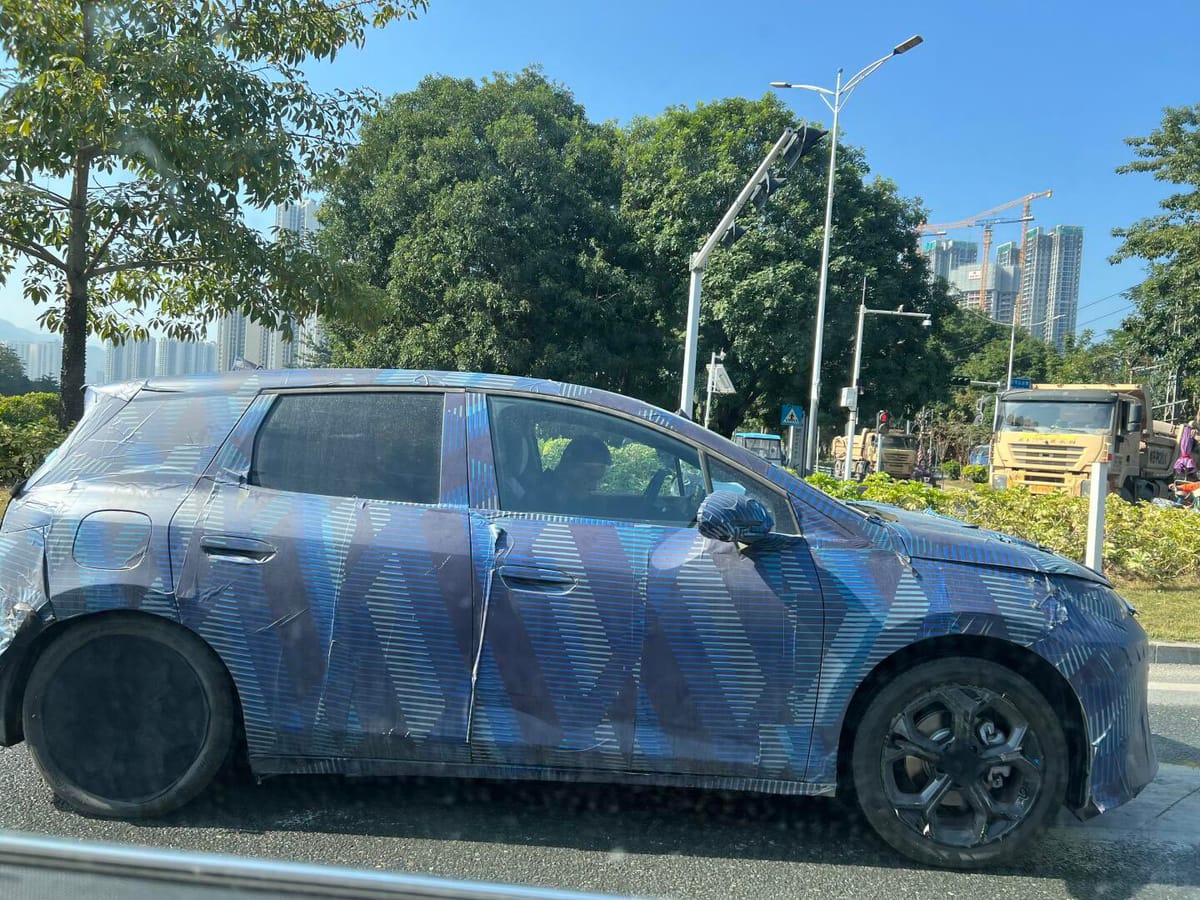
X user @DriveGreenLiveGreen has spotted a heavily camouflaged BYD test vehicle on public roads in Shenzhen this week. This marks the first indication that BYD is developing a next-generation Dolphin. Shenzhen is the lcoation of BYD's Global Headquarters, suggesting this is early-stage development work coming directly from the company's engineering center.
The current Dolphin recently surpassed one million units sold globally, making it China's fastest A-segment vehicle to reach this milestone since its August 2021 launch. Most manufacturers would extend that success but BYD is already testing its replacement.
What the Test Vehicle Reveals
The camouflaged prototype shows visible dimensional changes. The vehicle appears quite long with a sharper shoulder line which would indicate a larger interior and cargo space. It also appears to feature rims from the current BYD Seagull, which would indicate a closer tie to that vehicle line up, or perhaps just be a consolidation and utilisation of product skus.
Despite the early development stage, BYD has the ability to get product to market at a lightning fast pace. This vehicle could reach Chinese showrooms by late 2025, with international markets following sometime after.
Next-Gen BYD Dolphin Spy Shots from Shenzhen!
— DriveGreenLiveGreen (@DriveGreen80167) December 16, 2025
A heavily camouflaged BYD test vehicle was spotted today in Shenzhen's Pingshan district. Proportions point strongly to the upcoming 2026 BYD Dolphin (though it could theoretically be a larger Seagull variant).
The current Dolphin… pic.twitter.com/325CAJjDIu
The Geely Xingyuan Problem
The Xingyuan launched in October 2024 with pricing starting at 65,800 yuan (approximately $9,200 USD). The current BYD Dolphin starts at 99,800 yuan ($13,735 USD). That's a $4,500 price gap for vehicles of comparable size.
The competitive impact was immediate. The Xingyuan became China's best-selling vehicle across all segments in the first half of 2025, achieving 204,940 units sold—the only model to surpass 200,000 sales in that period. From January to September 2025, the Xingyuan sold 343,351 units total.
Meanwhile, BYD Dolphin sales stagnated around 20,000 monthly units since April 2025, with only minor fluctuations. The Geely Xingyuan didn't just compete with the Dolphin—it fundamentally reset customer expectations for what a compact EV should cost.
The Strategic Response
BYD's answer appears to offer more space, more features, but priced to compete directly with the Xingyuan. The size increase helps justify maintaining value perception while reducing the price gap.
What matters more than the dimensional changes is what's underneath. The next-generation Dolphin is expected to migrate to BYD's e-Platform 3.0 Evo with a rear-wheel-drive configuration.
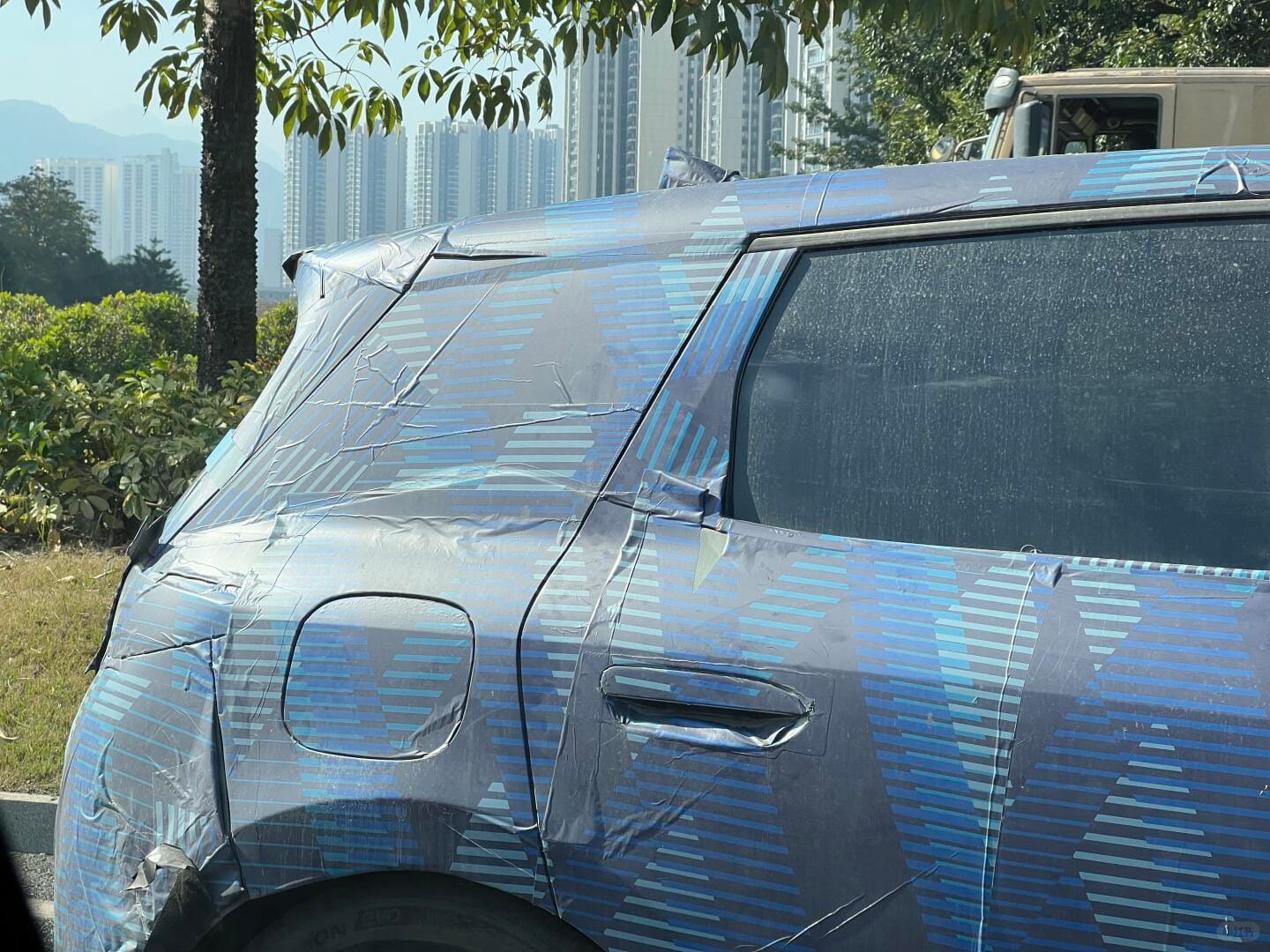
The appearance of a charging cover on the rear quarter panel would strongly suggest that this new BYD Dolphin would be a RWD vehicle, as FWD versions tend to ahve their charging ports on the front quarter panel.
The Geely Xingyuan uses rear-wheel drive with an 11-in-1 intelligent electric drive system. All Xingyuan trims are RWD. This architecture choice forced BYD's hand—not just on price, but on fundamental vehicle dynamics. A RWD option would be considered more desirable for potential buyers and would almost have to be a must from BYD on a next gen Dolphin.
Platform Economics
The platform flexibility is already proven. The current Dolphin uses e-Platform 3.0 in front-wheel-drive configuration. The BYD Seal uses the same platform in rear-wheel-drive. BYD has demonstrated it can rapidly adapt this architecture for different drivetrain configurations.
e-Platform 3.0 Evo represents the latest iteration of this technology. The system features electric motors capable of spinning up to 23,000 rpm— which at the time of it's release was the world's highest speed mass-produced electric drive motor for a car (which has since been surpassed by the 30,000 rpm offered on BYD's Super e-Platform). The integrated drive system consolidates to 12-in-1 (up from 8-in-1 on the current e-Platform 3.0).
The 12-in-1 system integrates the electric motor, silicon carbide electronic controls, high-efficiency reducers, DC converter, battery manager, and intelligent boost modules.
BYD's vertical integration enables this technology deployment at lower price points. The company manufactures its own batteries, electric motors, and electronic control systems. This eliminates supplier margins and allows faster iteration on platform technology.
As of May 2024, sales of models equipped with e-Platform 3.0 exceeded 3.9 million units. The platform architecture is mature, proven, and ready for rapid deployment across different vehicle segments.
The Hot Hatch Possibility
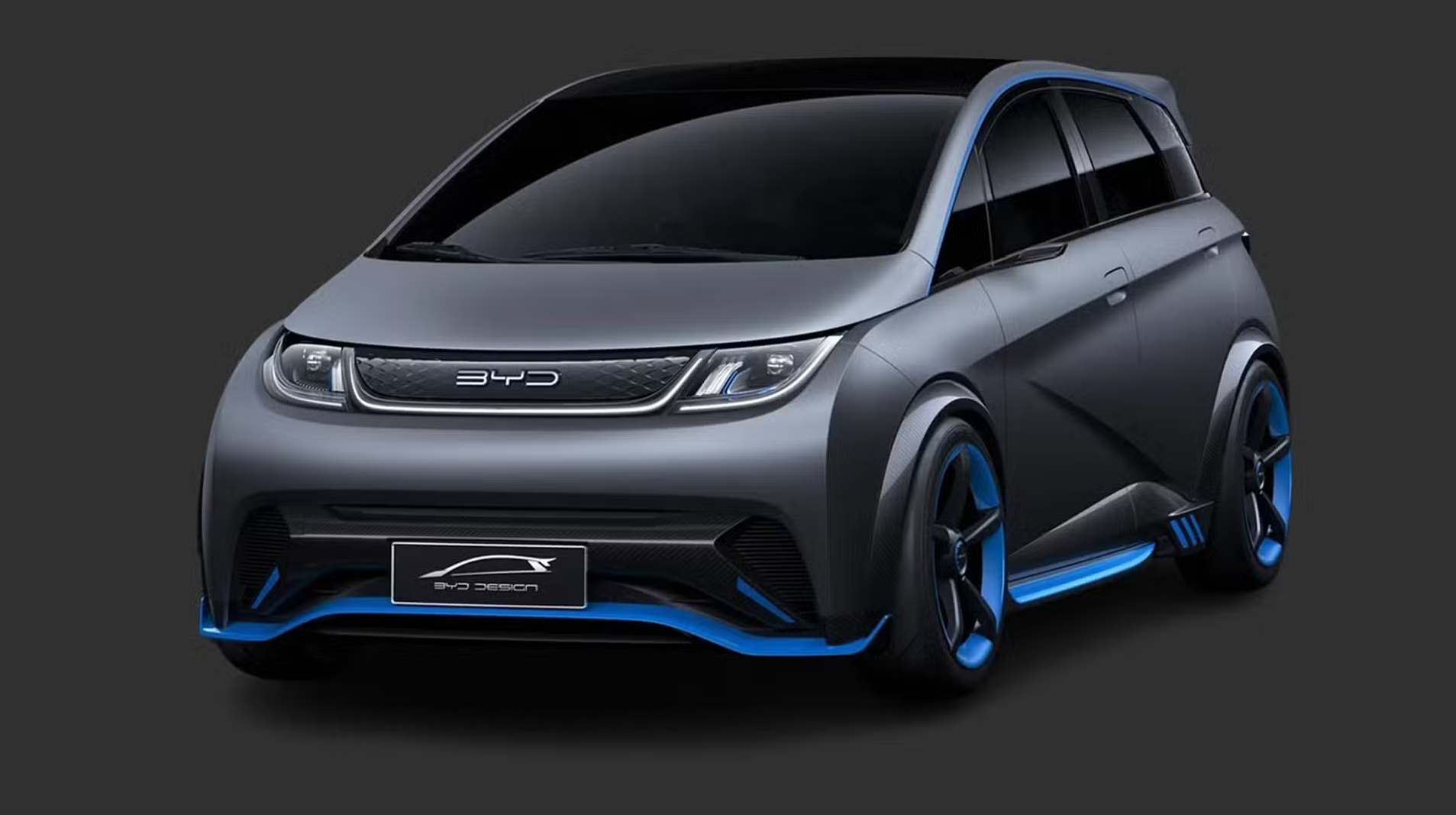
A rear-wheel-drive Dolphin opens another opportunity. BYD planned a performance variant called the Dolphin Sport back in 2023. Those plans were cancelled, likely because the front-wheel-drive architecture couldn't support the performance characteristics BYD wanted.
A rear-wheel-drive platform changes that calculation. The architecture now supports a hot hatch variant that could fill a gap in BYD's lineup—a performance-oriented compact EV.
The Competitive Implication
The camouflaged test vehicle in Shenzhen represents more than a model update. It's a visible marker of how quickly competitive dynamics shift in the Chinese EV market and how rapidly manufacturers can respond.
Geely reset customer expectations with the Xingyuan. BYD is answering with more vehicle, newer technology, and a compressed development timeline. The next-generation Dolphin will determine whether BYD can reclaim market share in the compact segment and reclaim it's once held position of highest selling EV model manufacturer.