BYD Produces 10,000 Vehicles at Brazil Plant Just Weeks After Opening

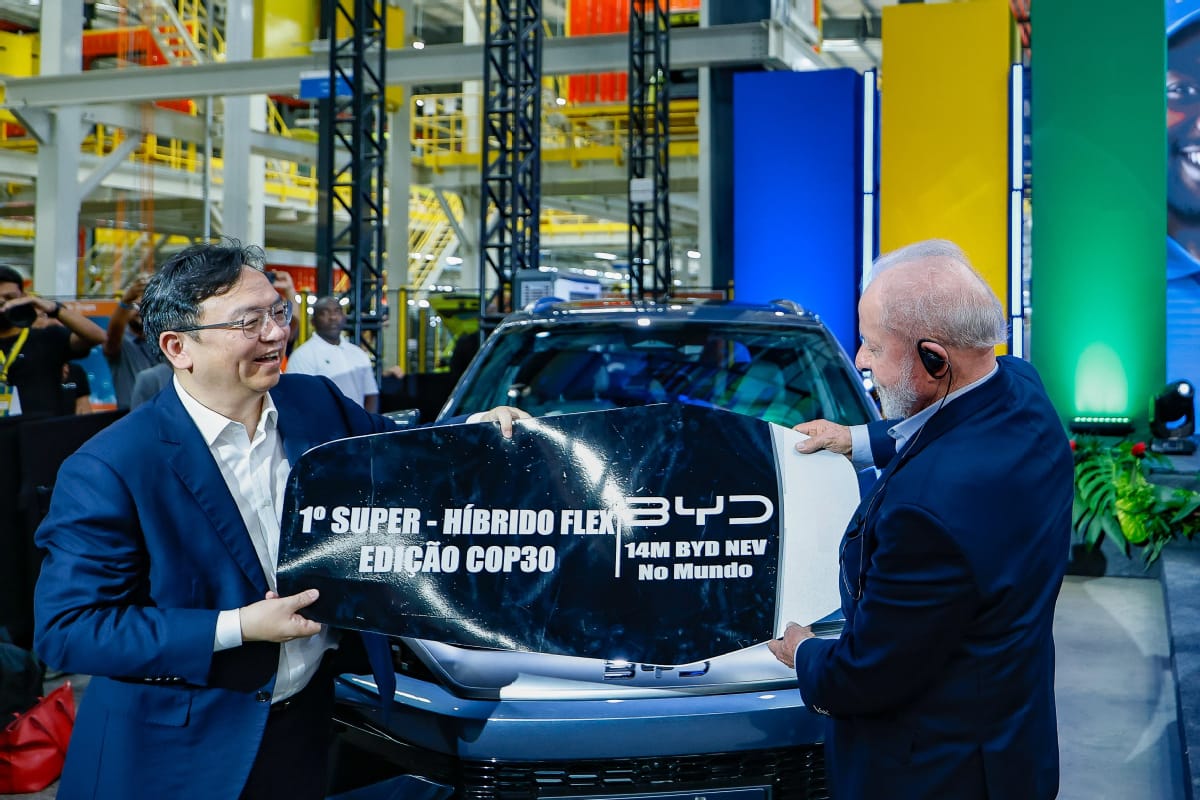
BYD reached 10,000 vehicles produced at its Camaçari facility in Brazil just weeks after the plant's official inauguration on October 9 in a report published by Strateic Energy Europe. The timeline reveals an unusually compressed production ramp for a new automotive manufacturing facility.
The plant targets initial capacity of 150,000 vehicles annually, with plans to scale to 300,000 units in a later phase. BYD founder Wang Chuanfu told Brazil's President Luiz Inácio Lula da Silva during the inauguration that production would eventually reach 600,000 vehicles per year.
Market Position Before Local Production
BYD already dominated Brazil's EV market before producing vehicles locally. The company captured approximately 70% of the battery electric vehicle (BEV) segment in 2024.
In December 2024 alone, BYD registered 10,091 vehicles in Brazil, ranking 8th among all automotive brands. Total 2024 registrations reached 76,713 vehicles, up 327.68% from 17,937 units in 2023.
Since entering Brazil three years ago, BYD has registered more than 100,000 fully electric vehicles nationwide. The company sells more than seven times the volume of the second-ranked BEV brand in the market.
Manufacturing Localisation Strategy
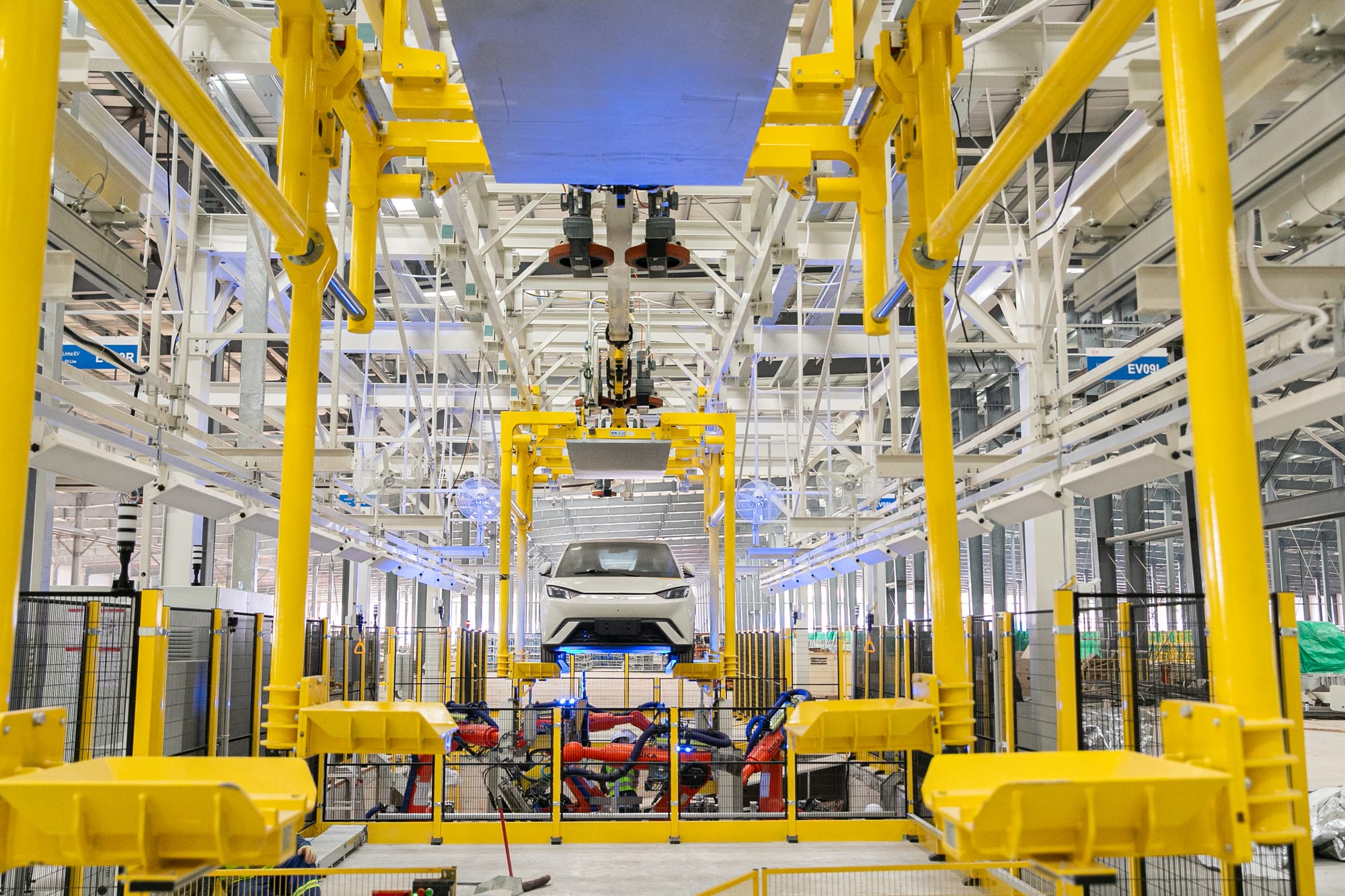
The Camaçari complex represents BYD's largest manufacturing facility outside China. The plant covers 156,800 square meters within a 4.6 million square meter industrial site.
BYD invested R$5.5 billion in the facility, which was built on the site of a former Ford Motor plant. Construction began in March 2024, approximately 15 months before the first vehicles rolled off the production line.
At the beginning of November, BYD added a second production shift with 120 employees working overnight. This immediate operational scaling demonstrates the facility's readiness for volume production.
Competitive Context
Chinese manufacturers captured over 85% of Brazil's electric vehicle sales in 2024. BYD's local production positions the company to avoid escalating import tariffs on electric vehicles, which currently stand at 35% and are being gradually removed through 2026.
Brazil represents the sixth-largest automotive market globally, with production and sales exceeding 2.3 million units in 2023. BYD's facility scale reflects this market's strategic importance within Latin America.
The company plans to use Camaçari as an export hub for Mexico and Latin America, leveraging tariff-free agreements between Brazil and Mexico for vehicles and components. This approach transforms local manufacturing into regional distribution infrastructure.

Production System Characteristics
Tyler Li, President of BYD Brazil, attributed the rapid ramp to "production capacity, technology, and industrial efficiency." The timeline from inauguration to 10,000 units suggests pre-operational preparation extended well beyond the official opening date.
BYD's manufacturing facilities benefit from relatively modern design, having been purpose-built for electric vehicle production over the past 15 years. This contrasts with legacy automakers adapting decades-old facilities for electrification.
The speed of the Camaçari ramp indicates BYD's manufacturing system transfers effectively across geographic markets. Local production in Brazil follows established patterns from the company's Chinese operations without extended learning curves.
Market Impact
BYD now ranks among the top 10 automotive brands in Brazil overall, not just within the EV segment. This positioning emerged within three years of market entry.
The company's approach—establishing market dominance through imports before committing to local manufacturing—differs from traditional automaker strategies of testing demand with limited imports before major facility investments.
With 70% BEV market share and over 50% of the plug-in hybrid (PHEV) segment, BYD has become the most dominant automaker in Brazil's electrified vehicle market. Local production capacity of 600,000 annual units positions the company for sustained expansion across Latin America.