BYD GLOBAL HEADQUATERS TOUR - A look into the world of BYD Manufactured Technology

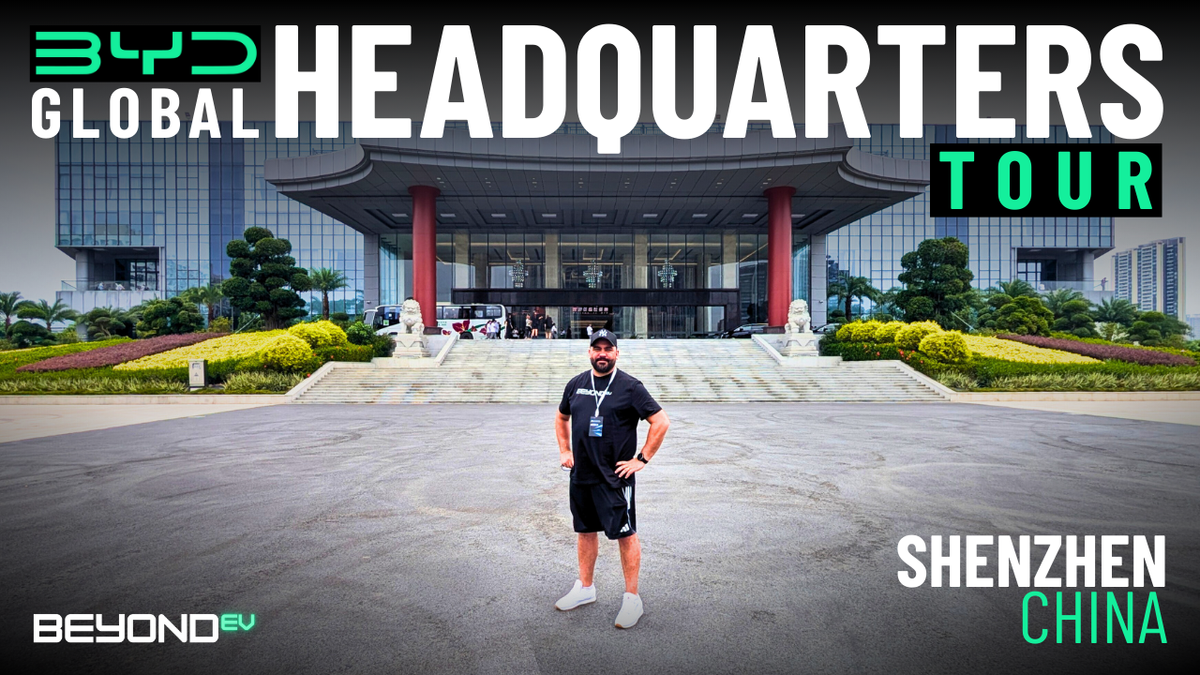
I walked through BYD's headquarters in Shenzhen in May 2025. The facility covers 7.6 million square feet and employs 50,000 people across what feels less like a factory and more like an industrial city.
What struck me wasn't the scale. It was the layout.
The Physical Proximity Changes Everything
BYD manufactures 75% of its vehicle components in-house across over 100 internal factories. Tesla purchases around 90% of its batteries from suppliers like Panasonic and CATL. The difference shows up in development speed: BYD brings new models from concept to production in roughly 24 months. Traditional automakers need 40 to 50 months or longer.
BYD employs 120,000 engineers. Their design team alone has over 1,000 people across four studios. The knowledge density creates iteration speed that partnership models structurally can't match. When your battery supplier operates three time zones away, you coordinate through scheduled calls and email chains. When they work in the next building, you walk over.
Excess Capacity Signals Strategy
BYD's annual production capacity in China reached 5.82 million vehicles in 2024. They produced just over 4 million vehicles last year.
That gap isn't inefficiency. It's strategic positioning.
The company expanded from 500,000 vehicles to 4 million in seven years—a 700% increase. They built capacity ahead of demand because excess capacity creates pricing flexibility. When market conditions shift, they can adjust production volume and maintain margins in ways competitors operating at full capacity cannot.
Their battery production capacity exceeds 135 GWh. They supply cells to their own vehicles and to Tesla's Megapack energy storage systems starting in 2025.
The 667-acre Shenzhen headquarters includes manufacturing plants, warehouses, employee housing, a hotel, a K-12 school, and their own monorail system. It's self-contained infrastructure that eliminates external dependencies.
This echoes Ford's original vertical integration strategy—controlling iron mines, rubber plantations, and forests to produce steel, tires, and wooden components. BYD now controls lithium mining, battery cell production, semiconductor manufacturing, and vehicle assembly.