BYD Discontinues Sealion 6 While Export Production Continues

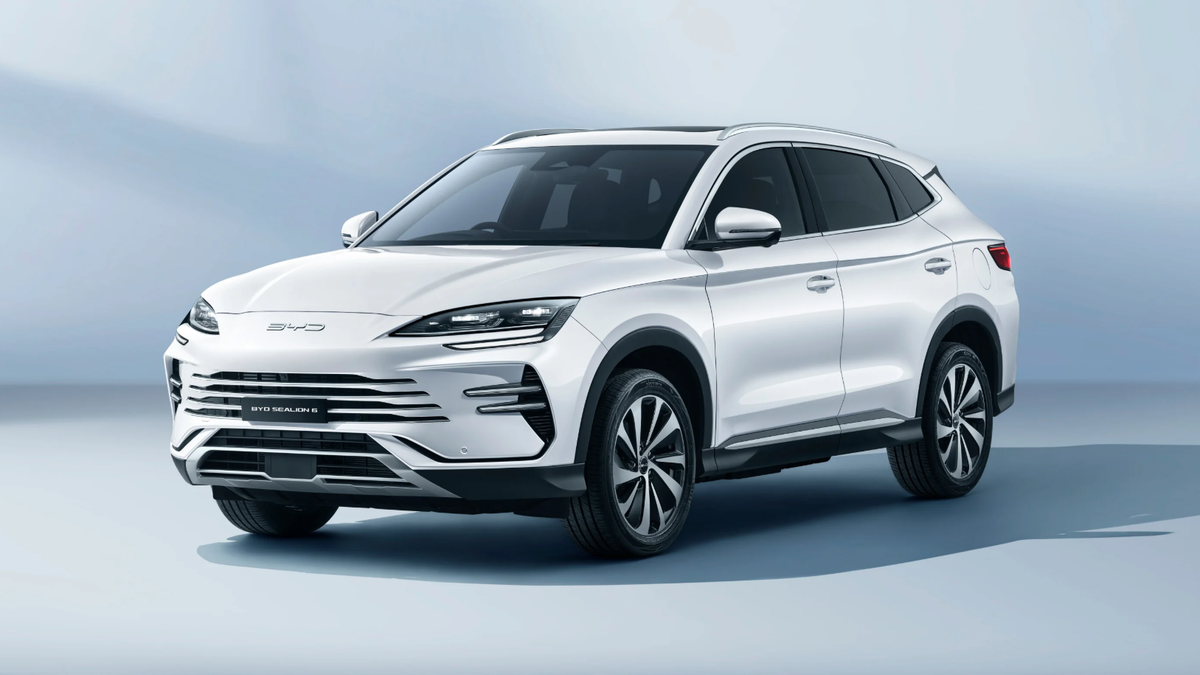
BYD has discontinued domestic sales of the Sealion 6 in China while maintaining production for international markets including Australia. The decision follows the July 24, 2025 launch of the Sealion 06, which has sold over 30,000 units monthly since August and reached 100,000 production units within 100 days. The Song Plus/Sealion 6 recorded 400,920 units in China during 2025, making this discontinuation a strategic repositioning rather than a product failure.
China and Thailand will both continue manufacturing the Sealion 6 specifically for export markets. The Thailand plant has already produced over 70,000 units and serves as an export hub to Europe and Asia-Pacific markets.
Two Different Competitive Clocks
China operates on a compressed product cycle to that of international markets. The domestic market in China demands shorter portfolio refreshes to stay competitive among dozens of EV manufacturers.
The Sealion 6 remains a strong seller globally, accounting for almost 20% of BYD Australia's 52,415 sales in 2025. Germany recorded over 11,818 cumulative units through November 2025. The UK exceeded 5,000 monthly sales.
China functions as the testing ground for rapid iteration while export markets receive proven platforms with longer commercial lifecycles. BYD maintains production for discontinued domestic models because those same vehicles continue generating revenue internationally.
Beyond EV BYD Sealion 6 Daily Driver Review
The Export Lag Pattern
This isn't the first time Chinese domestic updates have taken years to reach international markets. The BYD Seal received updates in the first half of 2025. It's now 2026 and Australia still receives the previous generation with no confirmed timeline for the updated version.
The Sealion 6 launched in Australia in 2024 as a renamed version of the Song Plus Champion Edition from 2023. The original Song Plus platform dates to 2020.
Export markets receive proven, this tends to create a multi-year gap between what Chinese consumers access and what international buyers can purchase. The pattern suggests Australian buyers might not see the Sealion 06 until 2027 or later, assuming BYD decides to bring it to the market at all.
The Sealion 6 will continue as a current-generation product in Australia for potentially years while China moves forward with the Sealion 06. Whether that extended international lifecycle protects resale values or creates depreciation risk depends on factors that haven't played out yet in markets where BYD is still establishing its brand presence.
Manufacturing Allocation as Strategy Signal
BYD reported over 1 million overseas sales for the first time in 2025, with December overseas deliveries reaching approximately 133,000 units. A 145% year-on-year increase. This export acceleration is happening precisely as BYD implements dual-product strategies between domestic and international markets.
Maintaining separate production for discontinued domestic models requires deliberate manufacturing allocation decisions. Production capacity, tooling, supply chain coordination, quality control systems all continue operating for vehicles no longer sold in the home market.
The decision signals that BYD understands the differing product strategies that international markets have over China, markets that demand proven platforms with longer commercial windows. The Thailand plant continuing Sealion 6 production while China produces the Sealion 06 domestically makes that geographic and strategic separation concrete. But it is yet to be seen how long this will go for and if BYD may possible change this strategy some time in the future.